Overview
The Gap Swype Fills
As these trends take hold, the way platforms pay users has failed to keep pace with how users now manage and receive money. Today, users generally rely on one of two methods to route platform payouts into stablecoin-powered apps, both with significant limitations.
Many stablecoin apps provide users with virtual bank accounts so they can receive payouts from traditional platforms. While familiar, this approach is often slow and costly. Payouts rely on legacy banking rails, which means delays, limited availability outside business hours, and no real-time settlement.
Some platforms offer direct crypto or stablecoin payouts, but these flows are brittle and poorly suited to the new generation of stablecoin apps. Platforms typically support a narrow set of assets and networks, forcing users to figure out which tokens and chains their app supports and hope there is overlap.
Worse, these flows expose users to raw crypto infrastructure: selecting networks, choosing assets, and manually pasting wallet addresses. This undermines the abstraction that stablecoin apps are designed to provide and introduces unnecessary risk and complexity.
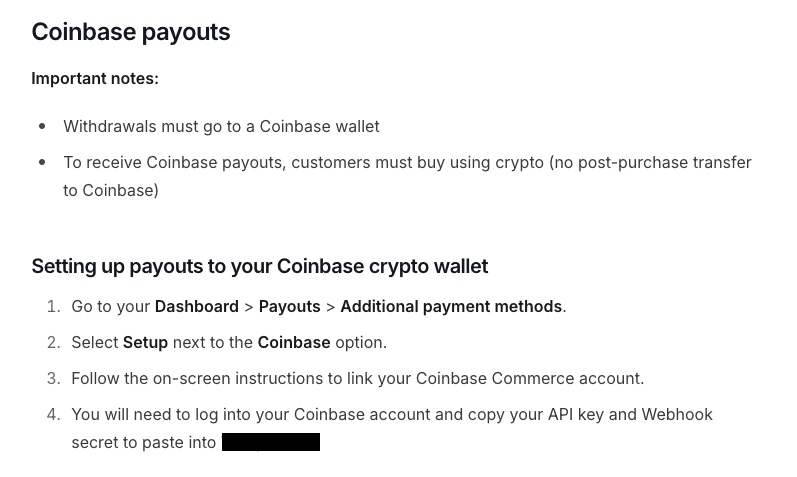
Example 1: this platform only supports payouts to Coinbase-issued wallets, requiring users to generate API keys through the Coinbase Developer Platform to receive funds.
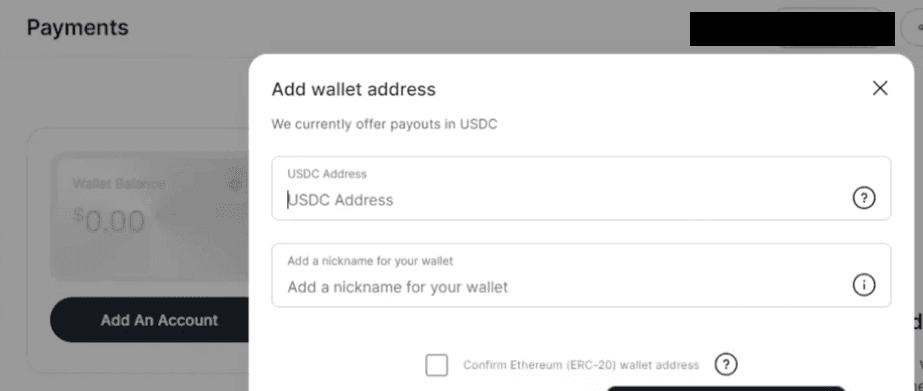
Example 2: a different platform forces payouts in USDC on a single blockchain and requires users to manually paste a wallet address to complete the payout setup.
The gap Swype fills
There is no simple way today for platforms to deliver fast, safe payouts into the growing ecosystem of stablecoin-powered apps without building and operating crypto infrastructure themselves.
Swype fills this gap by giving platforms a single integration for payouts and giving users a familiar, account-based way to receive funds into the app they already use, without either side needing to manage chains, assets, addresses, or custody.